
1.Flywheel power generation device

The problem was
To date, all devices developed for generating electricity using flywheels operate by rotating both the flywheel and the generator simultaneously from a central axis; consequently, rotating a flywheel generation device in this manner requires a substantial amount of initial energy. Therefore, in terms of saving on electrical input, these devices offer no significant advantage.
After solving the problem
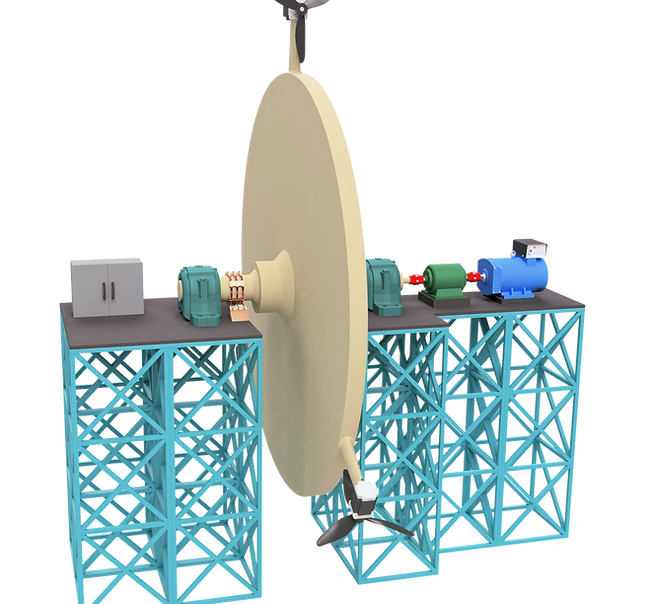
1. Centralized Power Conversion: This invention features a flywheel driven from its outer circumference, while the generator is driven from the center. This configuration optimizes the conversion of stored kinetic energy into high-capacity electrical output.
2. Peripheral Propulsion and Torque: Multiple electric propellers are mounted along the rim of the flywheel, allowing the drive force to be applied at a maximum distance from the center. By utilizing this mechanical leverage, the design generates significantly greater torque and stores more energy. This approach also achieves higher rotational speeds and reduces energy losses typically caused by gearbox friction.
3. Efficiency and Application: I assert that this device serves as a superior alternative to traditional wind energy systems, as it is capable of generating a higher energy output with a lower initial energy input—or, when acting as a prime mover, it can operate using significantly less input power.
2.Hydro/steam power generation and multiplication device
The problem was
Currently, hydro power generation or steam power generation is done by applying water or steam pressure to the turbine bucket to rotate the generator, in which the pressure of water or steam is applied continuously, which leads to consumption of more water or steam.
After solving the problem
1. This invention uses a heavy weight and large diameter flywheel. The force of water or steam is applied on the turbine bucket to rotate the flywheel at a fixed rpm, and after the flywheel reaches the fixed rpm, the water or steam is stopped. And the heavy weight and large diameter flywheel uses its stored energy to rotate the generator for a long time. And as soon as the flywheel reduces to the fixed rpm, the force of water or steam is restarted, this process continues continuously, thereby saving water or steam.
2. This invention uses a heavy-weight, large-diameter flywheel. Water or steam force is applied to the turbine bucket to rotate the flywheel at a fixed rpm. When the flywheel reaches the fixed rpm, the water or steam is cut off. The water or steam force is then transferred to the bucket of the second device, and the heavier, larger-diameter flywheel of the first device uses its stored energy to rotate the generator for a longer period of time. As soon as the first device's flywheel slows to a fixed rpm, the water or steam force is resumed. This process allows multiple devices to rotate continuously, multiplying power generation.
3.Flywheel water pumping and multiplication device
The problem was
1. Currently, electric or fuel engine is used to run the water pump, in which water is pumped by continuously running the motor or engine, which consumes more electricity or fuel.
2. Currently, electric or fuel engines are used to run water pumps, in which water is pumped by continuously running the motor or engine, in which water pumping cannot be multiplied.
After solving the problem
1. This invention uses a heavy-weight, large-diameter flywheel. A motor or fuel engine is spun to rotate the flywheel at a fixed rpm. Once the flywheel reaches its fixed rpm, the motor or fuel engine is stopped. The heavy-weight, large-diameter flywheel uses its stored energy to rotate the pump for a longer period of time. Once the flywheel reaches its fixed rpm, the motor or fuel engine is restarted. This process continues continuously, resulting in energy savings.
2. This invention uses a heavy-duty, large-diameter flywheel. A motor or fuel engine is used to rotate the flywheel at a fixed rpm. When the flywheel reaches the fixed rpm, the motor or fuel engine is shut off. Then, the motor or fuel engine of the second device is started. The heavy, large-diameter flywheel of the first device uses its stored energy to rotate the pump for a longer period of time. As soon as the flywheel of the first device slows down to a fixed rpm, the motor or fuel engine of the first device is restarted. This process allows multiple devices to rotate continuously, due to which water pumping is multiplied.
4.Deep running water power generation device

The problem was
1. This invention uses a heavy-weight, large-diameter flywheel. A motor or fuel engine is spun to rotate the flywheel at a fixed rpm. Once the flywheel reaches its fixed rpm, the motor or fuel engine is stopped. The heavy-weight, large-diameter flywheel uses its stored energy to rotate the pump for a longer period of time. Once the flywheel reaches its fixed rpm, the motor or fuel engine is restarted. This process continues continuously, resulting in energy savings.
2. This invention uses a heavy-duty, large-diameter flywheel. A motor or fuel engine is used to rotate the flywheel at a fixed rpm. When the flywheel reaches the fixed rpm, the motor or fuel engine is shut off. Then, the motor or fuel engine of the second device is started. The heavy, large-diameter flywheel of the first device uses its stored energy to rotate the pump for a longer period of time. As soon as the flywheel of the first device slows down to a fixed rpm, the motor or fuel engine of the first device is restarted. This process allows multiple devices to rotate continuously, due to which water pumping is multiplied.

After solving the problem
1. Width Coverage: One or more turbines are installed in series across the width of a river, canal, or valley to ensure the entire span is covered.
2. Blade Efficiency: The turbine blades are set at a specific angle to operate effectively within the water's depth. This configuration allows the blades to enter the water with minimal resistance.
3. Adaptive Mounting: The device is mounted on a floating vessel designed to rise and fall with changing water levels, maintaining its position at a single location.
4. This invention demonstrates a novel method for extracting energy from flowing water that potentially exceeds the power density and efficiency of all existing state-of-the-art turbines. Or I claim this invention can generate more electricity from flowing water than any other device created to date.
5.Auto or manual power generation device
The problem was
Currently, there is a lack of accessible manual flywheel power generators that allow users to produce electricity while exercising.

After solving the problem
This invention addresses that gap by utilizing a high-mass, large-diameter flywheel designed for ease of use and maximum efficiency. By converting physical activity into usable energy, this device can power water pumps or other electrical appliances, directly reducing household electricity costs.